Realizing Equal Rights: The Essence of Inclusive Education for Children with Special Needs
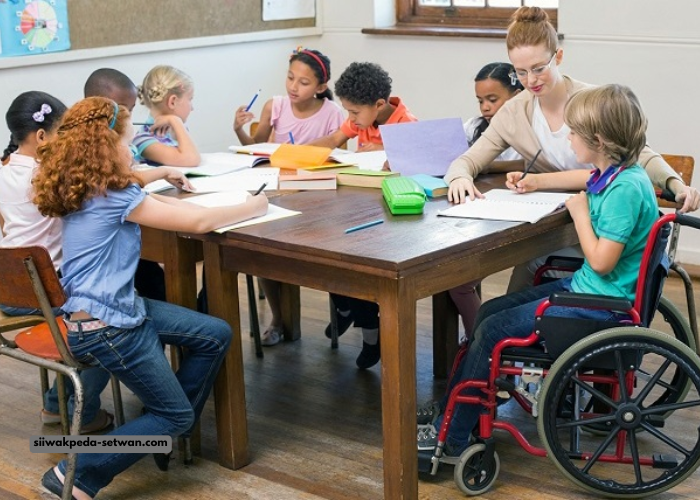
pgsd.fip.unesa.ac.id The presence of an inclusive education system is a breath of fresh air in efforts to guarantee the basic right of every child to obtain knowledge without discrimination. Primary education is a crucial phase where the values of accepting diversity must begin to be deeply instilled. Every child, including those with special needs, has unique potential that deserves to be developed optimally in the same environment. This integration aims so that all students can learn from each other to empathize and respect differences from an early age. An inclusive learning environment does not only provide benefits for children with special needs, but also for children in general. They learn to socialize with individuals who have very diverse and different backgrounds and abilities. The presence of competent mentors is the key to ensuring that every specific need of the students can be met well. Education belongs to everyone regardless of the physical or mental conditions attached to a person.
The inclusive approach demands adaptation in teaching methods so that they can reach all students effectively and efficiently. A flexible curriculum is designed such that learning goals are still achieved despite through different ways. The use of accessible teaching aids and assistive technology greatly helps children with special needs in understanding the subject matter provided. The main focus of this education is the child's independence in carrying out daily activities and developing their social skills. Every small progress achieved by the child is a major achievement that must be celebrated together in the classroom. Healthy interaction among peers helps increase the self-confidence and learning motivation of these students. There is no longer a feeling of alienation because every child feels like an important part of a learning community that supports them. With the right support, learning barriers can be minimized so that academic and non-academic potential can develop in a balanced way.
The importance of creating a friendly atmosphere for all children will impact the formation of a more tolerant social character in the future. Knowledge on how to communicate with friends who have special needs becomes a valuable lesson that is not obtained from textbooks. This trains patience, concern, and a willingness to help others without expecting any reward from anyone else. Inclusive education also plays a role in erasing the negative stigma that is often attached to persons with disabilities in the social environment. When children are accustomed to living side by side in diversity, they will grow into more open and wise adults. Supporting facilities in the learning environment must continue to be improved so that all children feel comfortable and safe while doing activities. Psychic security is the main thing that must be guaranteed so that no bullying or exclusion occurs against anyone. All parties must commit to creating a learning space that truly humanizes every individual without any exception.
Globally, this news report is very closely related to the SDGs (Sustainable Development Goals), specifically SDG 4: Quality Education. This goal emphasizes guaranteeing inclusive and equitable education and promoting lifelong learning opportunities for all individuals. Furthermore, this effort is also highly relevant to SDG 10: Reduced Inequalities, which focuses on empowering and promoting social inclusion for all people. Through inclusive education, we are building the foundation for a more just and equal world for all of humanity. Reducing inequality in access to education will have a direct impact on improving the quality of life and social welfare as a whole. Children who receive a proper education today will become the drivers of economy and social change in the future. Therefore, ensuring inclusivity in education is not only a moral obligation but also a sustainable development strategy. Every step taken to support inclusivity is an investment for a more harmonious and peaceful future of the world.
The success of implementing inclusive education requires strong synergy between all members of the learning community and the family environment. Continuous communication is very necessary to monitor the child's development holistically from both cognitive and emotional aspects. Evaluation of methods and supporting facilities must be carried out routinely to adjust to the dynamic needs of the child. The spirit to continue learning and adapting to new ways of educating must remain burning in the hearts of every teacher. We all have a responsibility to ensure that not a single child feels left behind in achieving their dreams. The success of inclusive education is a mirror of a nation's progress in respecting human rights. Let us make every learning place a warm and friendly home for all children to grow and flourish. With inclusive education, we are planting the seeds of change for a better world for the next generation.
Writer: Mutia Syafa Yunita
Photo: Google
