Measuring the Success of Education in Humanizing Humans
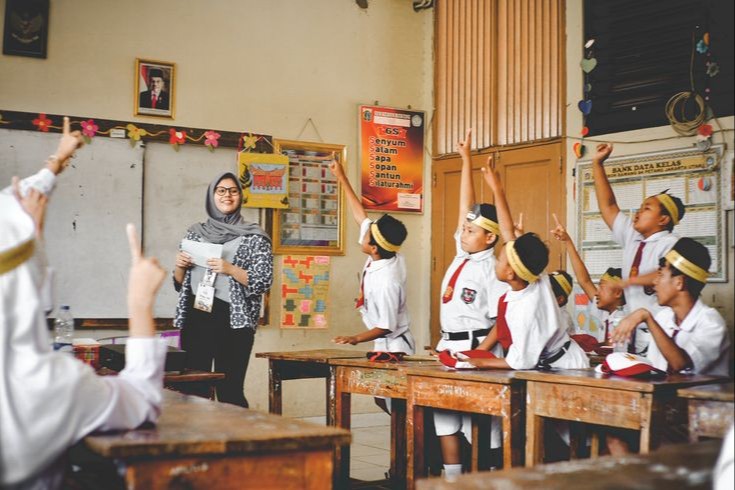
pgsd.fip.unesa.ac.id The end of the year becomes the right momentum to evaluate whether the current learning system has succeeded in placing human dignity as the highest priority. Education is essentially not just a process of transferring knowledge but a profound effort to sharpen the sensitivity of the heart and the clarity of the mind. During the past year, various dynamics have colored the learning spaces that should be the nursery for noble human values. This reflection is important to see to what extent empathy and social solidarity have grown in the souls of the students. The success of an educational process is not only measured by numbers on paper but by changes in more civilized behavior. Placing humans as active subjects in learning will provide space for creativity and innovation to continue to grow naturally. Increasingly mechanistic challenges of the times demand the world of education to maintain the humanist side so as not to be lost in the current of technology. An honest evaluation of the process that has been passed will be a strong footing to improve the quality of learning in the coming year.
The process of humanizing humans in the learning space involves recognizing the uniqueness of every individual who has different talents and interests. Uniformity of teaching methods without looking at the background and potential of the child will instead hinder the growth of an authentic and independent character. Ideal education is education that is able to free the mind from the shackles of ignorance and unproductive social pressure. A supportive learning environment must be created in such a way that every individual feels safe to express themselves and their opinions openly. Mutual respect among fellow members of the learning community becomes a primary indicator that human values have been well internalized. There should no longer be barriers that distinguish treatment based on social status or economic ability in obtaining quality knowledge services. Justice in gaining access to information is a basic right that must be fulfilled to ensure no child is left behind. Thus, the essence of learning is to find an identity that is beneficial to the surrounding environment and the wider community.
Throughout this year, mental and psychic challenges have often emerged along with the high demands of unhealthy competition in the educational environment. Excessive academic burdens sometimes make the essence of happiness in learning forgotten by many parties involved in it. Year-end reflections show that the mental health of students must receive the same amount of attention as academic achievement. Humanizing humans means understanding that every child has limited abilities and requires different amounts of time to process each lesson. An approach of affection and understanding has proven more effective in forming self-discipline compared to methods of punishment or pressure that are coercive. Strong character can only grow on fertile ground with stable emotional support full of sincerity. The future of the nation depends heavily on how we treat our children in their process of seeking knowledge every day. Every small action that shows appreciation for the child's dignity will leave a mark as a valuable lesson they will carry into adulthood.
This reflective narrative is highly in line with the global vision in the SDGs (Sustainable Development Goals), specifically SDG 4: Quality Education. The main focus of this point is ensuring that all children receive relevant, effective, and humanizing education to support their well-being. Furthermore, this also supports SDG 10: Reduced Inequalities, by providing equal opportunities for every individual to develop to their maximum potential. Education that humanizes humans will create a society that is more inclusive, tolerant, and has a high sense of concern for others. Through deep reflection, we are reminded again that the ultimate goal of sustainable development is the physical and spiritual well-being of humans themselves. Without the human aspect, the economic and technological progress achieved by a nation will feel empty and lack a solid foundation. Therefore, the integration of moral values in every curriculum is an absolute requirement for the achievement of sustainable development goals in the future. We are all responsible for ensuring that every learning process always provides a positive impact on the development of complete human character.
Moving into the new year, the commitment to continue improving the quality of civilized education must be strengthened by all elements of society collectively. Innovation in teaching methods must remain grounded in ethical values that are not eroded by time and dynamic changes. The classroom must transform into a human laboratory where everyone learns to help each other and share knowledge. The use of information technology must be directed as a tool to expand the reach of positive and enlightening education for the nation's life at large. Awareness of the importance of maintaining the environment must also be part of the process of humanizing oneself through concern for nature. With this spirit of reflection, it is hoped that a new spirit will emerge to create a learning system that is more inclusive and friendly to all individuals. Education is a long journey that never ends in the search for truth and goodness for the survival of a better human civilization. Let us make next year the year where every learning process is truly capable of elevating human degree and dignity to the highest level.
Writer: Mutia Syafa Yunita
Photo: Google
